A Little Fishy

Picture of anchoviesIt’s one of those things – either you love or loathe anchovies.

Many a disagreement has erupted over the inclusion (or exclusion) of anchovies on a pizza.

I love anchovies, and I can’t put it any more bluntly – I LOOOOVE them!

For me, pizza is an excuse to eat anchovies. Caesar salad is an excuse to eat anchovies. And, anchovies are an excuse to eat anchovies.

When I bite into a fishy, salty anchovy fillet, it’s as close as I can get to gastronomic heaven.

There are some important things that you need to know about anchovies.

First of all, they’re not born in tins of oil. Anchovies are a small silver fish mainly found around the Mediterranean and Southern European coastlines.

After being caught in fine mess nets, they’re filleted, cured in salt and preserved in oil.

Sometimes they’re rolled up, and sometimes canned flat. However, they can be purchased without oil (just coated in salt). Anchovies can also be purchased as a fresh fish.

Usually the more expensive anchovies from Morocco are bigger, plumper and tastier.

The cheap tinned ones can sometimes be a little average.

If you’re offended by the saltiness of anchovies, then try draining the oil and soaking the fillets in cold water for half an hour. This will make them a little more subtle.

You never know, you just might like them… or not!

Morish Olive Tapenade

Blend together 500g Kalamata olives, 2 rinsed anchovy fillets, 1 garlic clove, 2 tbsp capers, 2 fresh basil leaves, 1 tablespoon fresh lemon juice and 2 tbsp olive oil.

Serve as a dip with crusty fresh bread.

Posted in Food and Cooking | Tagged , , , , , | Leave a comment

Red as a Beetroot

Picture of beetroot

The beetroot is a root vegetable, which originated in Germany.

It made its way to the Mediterranean in the fifteenth century and is now cultivated all over the world.

It was originally grown for its leaves that can be cooked like spinach or used fresh in salads. However, the large bulbous root is now used more often.

There is several species of beetroot, ranging from a dark purple-red, to a golden or white variety.

There is also an Italian beetroot called ‘Chioggio’ with alternating rings of purple and white, like a bull’s eye effect.

It takes a little effort to cook beetroot correctly. Don’t peel them before boiling as they will bleed and lose their colour – peel them after they are cooked.

Beetroot has many uses; it can be steamed, boiled, roasted, pickled or even eaten raw in salads.

There is a very famous Ukrainian soup called ‘borscht’; made from beetroot, cabbage, onions, potatoes, chicken stock, and cream.

Beetroot contains no fat, very few calories and is a great source of fibre.

Tasty Beetroot Dip

  • 1                               Beetroot
  • 2                              Garlic Cloves
  • 1 tbsp                     Lemon Juice
  • 1                               Salad Onion (small)
  • 1 ½ cups              Natural Yoghurt
  1. Bake the beetroot for approximately 1 hour at 200°C.
  2. Allow it to cool then peel and finely grate.
  3. Crush the garlic and finely chop the onion.
  4. In a bowl combine all the ingredients; mix well and season to taste.
  5. Serve with slices of toasted Turkish bread, crackers or celery sticks.


Posted in Food and Cooking | Tagged , , , , | Leave a comment

The Raw and the Cooked

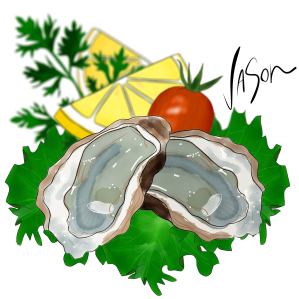
Picture of oystersIt seems to me that most people are repulsed by the thought of eating fresh raw oysters.

A taste for oysters ‘a la natural’ is an acquired taste, best developed at a young age but certainly obtainable later in life.

I personally hadn’t seen a fresh oyster until I became an apprentice chef. I’d eaten the tinned cooked variety plenty of times, but there is simply no substitute for fresh.

Ok, I admit the texture of a fresh raw oyster is slimy, gooey and challenging to say the least (there’s comparisons I won’t mention).

However, in my opinion the flavour of a freshly shucked live oyster is the most exquisite gastronomic experience a person can have.

Just a squeeze of lemon juice and a sprinkle of flaked sea salt evokes memories of the spray of Queensland’s tropical surf on your lips (what a dreamer!).

There are two main varieties available in Australia, mostly the farmed Sydney Rock Oysters, a delicate but full-bodied flavour, or the larger Pacific Oyster.

The Pacific Oysters are quite popular because of their generous size and price, but they are often purchased frozen and are a little fishy in flavour, and not my favorite.

When buying fresh (in the half shell) look for a plump, shiny oysters with a fresh sea water smell.

Shallot Dipping Sauce

Combine 2 tablespoons of finely chopped shallots, half a teaspoon of chopped red chili (seeds removed), 1 tablespoon of finely chopped wild rocket leaf, 50mls of red wine vinegar, 50mls of extra virgin olive oil and 1 teaspoon of flaked sea salt.

Spoon over a freshly shucked oyster and live an adventure.

Posted in Food and Cooking | Tagged , , , , , , | Leave a comment

What Came First… The Egg Or The Plant?

Picture of aubergineOften referred to as ‘eggplant’, Aubergine is commonly used as a vegetable, but it’s actually as a fruit, related to tomatoes and potatoes.

In fact, the fruit itself is botanically classified as a berry.

And, believe it or not, the aubergine plant is a close relative of the tobacco plant.

Originating in South East Asia, the aubergine is also widely used in Italian, Mediterranean, French and Middle Eastern cuisines.

There are many varieties of aubergine – some are small pea shaped and some are large pumpkin-like in shape and size.

Colours vary from green, cream, dark purple to yellow.

Aubergines can be served hot or cold, braised, baked, battered and deep-fried, grilled, pan-fried, barbecued, stuffed, blended and pureed.

The most famous dishes made from aubergine are ratatouille (not the movie), moussaka, baba ghanoush and imam bayildi.

I’m a big fan of aubergine, especially grilled slices.

However they can be a little bitter in their original form. That’s because they contain the highest level of nicotine of any vegetable, but not enough to be additive.

You would have to eat around 10kg of raw eggplant to consume the equivalent amount of nicotine found in one cigarette.

None-the-less if an eggplant is particularly bitter it may need to be degorged, which means removing its moisture and the bitterness with it, as in the recipe below:

Grilled eggplant

  1. Cut an eggplant into round slices (approximately 1cm thick).
  2. Place slices into a colander and sprinkle all the slices liberally with slat.
  3. Weigh the whole lot down with a heavy plate to help squeeze out the water.
  4. Leave them for at least half an hour and then rinse them off under cold running water.
  5. Pat each slice dry with paper towel.
  6. These slices can now be grilled on a barbecue plate to golden brown and then drizzled with high quality olive oil.
  7. Serve with antipasto of sun dried tomatoes, olives, feta cheese etc.
Posted in Food and Cooking | Tagged , , , , , , | Leave a comment