Go Nuts For Peanuts

Picture of peanutsDid you know that peanuts are not nuts at all? Peanuts are legumes –  I know that you knew!

Peanuts are also known as earthnuts, goobers, goober peas, pindas, pinders, manila nuts and monkey nuts (referring to the two nuts in a wrinkly pod, ha!).

In some countries, peanuts are referred to as ‘groundnuts’ because the peanut flower bends and penetrates the ground after pollination.

While underground, the tip of the flower develops into a pale-brown and brittle pod containing two nuts.

It’s believed the peanut was domesticated in South America, where wild ancestors are still found.

The plant was later spread worldwide by European traders. Cultivation in North America was popularised by African Americans, who brought the Kikongo word goober.

In South America, the peanut is thought to have first grown in Argentina or Bolivia, where most wild strains grow today.

Fossilised peanuts between 10,000 and 100,000 years old have also been found in China, along with records they were grown there on a large scale by the Chinese civilisation.

In most peanut growing countries, there are two main varieties grown commercially  – the large Virginia Bunch variety and the smaller Spanish variety. Although there are many other types grown in lesser amounts.

Although most people predominantly use peanuts as a snack or in products such as peanut butter, many are now discovering their versatility and health benefits.

They can be used in all kinds of sweet and savoury recipes.

Spicy Pumpkin and Peanut Soup

  • 1 tsp extra virgin peanut oil
  • 1 cup onions, finely chopped
  • 1 tsp red chilli, finely chopped
  • 1 tsp fresh ginger, finely grated
  • ½ cup carrots, chopped into chunks
  • 1 cups pumpkin, chopped into chinks
  • ½ Lt chicken stock
  • 1 cup tomato juice
  • ½ cup peanut paste
  • 1 tsp sugar
  • natural yoghurt
  • peanuts, chopped
  • fresh chives, cut into sticks
  1. Fry onion and red chilli in peanut oil until tender.
  2. Add ginger, carrots, sweet potato and chicken stock. Simmer until all ingredients are cooked and tender.
  3. Add tomato juice, peanut butter and sugar.
  4. Bring back to the boil, season and then blend until smooth.
  5. Serve with a dollop of natural yoghurt, sprinkle on chopped peanuts and chives.

Makes 4 serves Click here to view image
Posted in Food and Cooking | Tagged , , , , , | Leave a comment

Pointy End Of The Pineapple

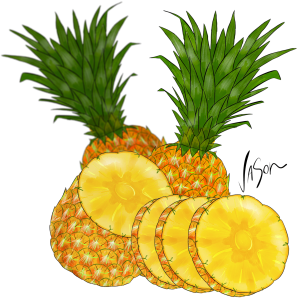
Picture of pinapplesOriginally named after its resemblance to the ‘Pine Cone’, pineapple is a cylindrical shaped tropical fruit with a thick, prickly, diamond-patterned skin with a crown of green spiky leaves.

The pineapple plant can bloom hundreds of spectacular, spiral shaped flowers which miraculously fuse together to form the fruit. This means that a pineapple is actually many individual fruits (called eyes) that join together to form the large pineapple that we all recognise.

Pineapples are native to South America, but are now grown and cultivated in many tropical regions around the world.

My home State of Queensland, Australia happens to be a prolific grower of pineapple and has over the course of many decades carefully cultivated a world renowned species that is fluorescent gold and sweetly perfumed.

I once planted a pineapple head; it eventually grew into a plant which took almost two years to bear fruit. Given such a long growing cycle, it’s probably easier and quicker to just go and buy one.

Pineapple generally has a juicy, sweet (yet tart) flesh made of tender fibres.

The fruit can be peeled and eaten raw, chopped and added to fruit salads or blended into smoothies, mocktails and cocktails.

It can also be cooked on the barbecue, crumbed and deep-fried as a fritter, or caramelised in a pan with butter, brown sugar and flambéed with rum.

Be aware that fresh pineapple contains an acid called ‘Bromelain’ which breaks down proteins, such as gelatine. Therefore, if you want to make sure your pineapple jelly or cheesecake will set, you’ll need to cook out the acid first.

However, the acid can also help tenderize foods such as calamari when soaked in a pineapple puree.

Pineapple is low in saturated fat, cholesterol and calories, but high in fibre, antioxidants and vitamin C.

Posted in Food and Cooking | Tagged , , , , , , | Leave a comment

Mushrooms Go With Everything

MushroomsShimeji, Shitake, Oyster, Pink Salmon, Golden Oyster, White Coral, Wood Ear, Swiss Brown, Portobello, Field, Flat, Horn of Plenty, Straw, Cep, Chanterelle, Morel and Enoki. Some of these mushrooms are as hard to pronounce, as they are to spell.

How lucky are we to now be able to by all of these varieties from the local grocery store?

Commercially cultivated white mushrooms have been available in most western countries, since the 1930’s, but a myriad of gourmet varieties (such as the Asian selections) have only just emerged in the last few decades.

There are approximately another 2000 edible varieties available throughout the world.

Mushrooms are overwhelmingly popular because of their ease of preparation, cost effectiveness, distinct flavour, versatility and year-round availability.

They are a significant source of B complex vitamins and are a popular vegetarian substitute for meat.

I work on the principle that mushrooms go with anything and everything.

Mushrooms taste great with seafood, chicken, beef, lamb, pork, eggs and other vegetables.

There is virtually no other vegetable that can match the versatility of mushrooms.

 Asian Style Sautéed Mushrooms

  1. Heat 2 tablespoons of extra virgin peanut oil.
  2. Fry off 1 finely sliced onion.
  3. Add 2 crushed garlic cloves and 150g finely sliced Swiss, 150g Field and 150g White mushrooms.
  4. Cook out for 3 minutes and add 100g of Enoki mushrooms, toss for 1 minute and stir in 50mls of Kecap Manis Sauce and 30mls of Sweet Chilli Sauce.
  5. Serve on top of your favourite barbequed steak, with a fluffy omelet for breakfast or just eat with fresh bread.

Serves 6.

Posted in Food and Cooking | Tagged , , , , | Comments Off on Mushrooms Go With Everything

Humble Pumpkin

Picture of pumpkinsA well-known food identity once told me “Pumpkin doesn’t belong in desserts”. Ironically I had a pumpkin cake as a dessert only two days later in an acclaimed restaurant – and I loved it.
Think about pumpkin pie or pumpkin scones, they’re classics.

I once made a delicious baked pumpkin and chocolate cheesecake – unfortunately it didn’t sell all that well, because the diners were a little apprehensive.

They would have loved it if they had just stepped out of their comfort zones.

Pumpkins can be used either sweet or savoury.

But what are they anyway?

Pumpkins are a member of the ‘gourd’ family, and as far as many Americans are concerned there is only one kind, the one that you make into a jack-o-lantern.

Mostly everything that Australians consider pumpkin is apparently ‘Winter Squash’.

Some countries call them all squash, so wherever it is you live in the world be careful when reading international recipes.

As an Aussie, I’m happy enough to blindly call them all pumpkins.

Pumpkins generally have a sweet orange coloured flesh.

They can be roasted, boiled, steamed or mashed.

Some pumpkins have a tender skin that can be left on and eaten with the flesh, while others need the skin removed.

The seeds can be dried and eaten in salads or just as a snack.

Interesting Ideas for Pumpkin Soup

  • Try adding fruits to the soup, orange juice, mango pulp or my favourite, passionfuit. In my opinion, if an ingredient is orange in colour it goes naturally with pumpkin.
  • Instead of adding cream, use alternatives like natural yoghurt, a dollop of sour cream, coconut milk or Crème Fraiche.
  • Add additional flavours, such as Indian curry powder, Thai red curry or tandoori paste.

Easy As Pumpkin Pie

Start by lining a flan tin or large case with your favourite sweet pastry and blind bake (half cook). To make the filling, measure:

  • 2 cups pumpkin (cooked, cooled and mashed)
  • 2 eggs, lightly beaten
  • ¾ cup soft brown sugar
  • 1/3 cup cream
  • 1 tbsp sweet sherry
  • 1 tsp ground cinnamon
  • ½ tsp ground nutmeg
  • ½ tsp ground ginger
  1. Mix all ingredients together and whisk until combined and smooth.
  2. Pour into your pre-baked pastry shell and bake in a moderate oven (approximately 170oC) for about 40 minutes or until set.
  3. It’s best eaten at room temperature and serve with ice-cream or whipped cream. Enjoy!
Posted in Food and Cooking | Tagged , , , , , | Leave a comment

It’s Like Apples & Oranges

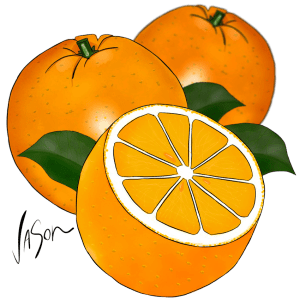
Picture of orangesIt’s true that you can’t compare apples and oranges; however you usually have to be in the mood for either.
There are times that I’m more in the mood for oranges, particularly juiced at breakfast time.

Oranges are a member of the citrus family and are closely related to grapefruits, lemons and limes.

Around the world, there are many varieties of oranges that vary from sweet to bitter flavoured. The sweet type is often eaten fresh or squeezed for juice, while the bitter kind is usually cooked into marmalades or citrus flavoured savoury dishes.

Although oranges are ironically orange in colour, there are some with blood red flesh.

Apart from the flesh and juice, the outer skin of the orange can be grated or cut into thin strips to form a zest used in bakery and confectionery items.

It’s the naturally formed oils concentrated in zest that impart their citrus aromatics into orange flavour liqueurs such as ‘Cointreau’.

The two most common varieties of orange available are*:

  • Navel, which are a perfumed, sweet and juicy fruit. They have a thick skin that is easy to peel and often don’t contain seeds, which makes them ideal for peeling and eating fresh as a healthy snack. They are also great pureed whole and baked into a flourless cake. Navel oranges are easily recognised due to a button shaped dimple on top.
  • Valencia, can also be sweet in flavour, have a thinner skin and a lot of juice with a few seeds. Therefore, they are great for juicing. The juice can be used as a beverage or churned into sorbet. Valencias have a star shaped stem.

Oranges contain heaps of vitamin C, antioxidants and are a good source of folate.

*oranges listed above are common Australian varieties.

Orange Butter Sauce

This recipe is spectacular with many desserts, such as chocolate tart, crepes and pancakes, with bread and butter pudding, or simply poured over ice cream.

  • 50g caster sugar
  • 25ml water
  • 160ml orange juice (fresh squeezed)
  • 60g unsalted butter
  • pinch salt


  1. Place sugar and water in a heavy based saucepan.
  2. Bring to the boil and then turn down to a gentle simmer.
  3. Simmer until a light caramel colour is achieved.
  4. Add orange juice and continue to simmer until reduced by half.
  5. Remove from heat, and while still hot, then gradually whisk in small cubes of the butter until emulsified.


Serves 4.

Posted in Food and Cooking | Tagged , , , , | Leave a comment

Like Them Apples

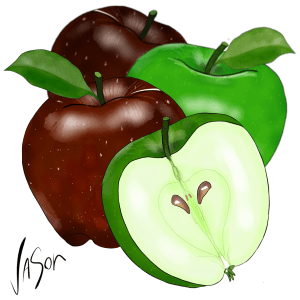
Picture of applesIt’s my observation that there are three kinds of people; those who like green apples, those who like red apples… and those who like oranges.
Apples are one of the earliest fruits cultivated by humans. There are now thousands of varieties grown all over the world.

There is a kaleidoscope of colours from red to pink, and green to yellow.

Apple textures range from crisp and firm to soft and juicy, and flavours contrast from sweet to tart.

With all the diverse climates that apples grow, there is a variety for all seasons; in fact apples are available all year round.

Some of the varieties you may find on grocery store shelves are*:

  • Royal Gala which have a sweet perfumed flavour and are great is salads or for apple sauce
  • Golden Delicious are very popular for cooking, especially as a pie filling or baked into muffins or tea cakes
  • Red Delicious are a sweet, crisp texture and are great eaten fresh or chopped into salads
  • Granny Smith apples are a firm with a slightly tart flesh that cooks well in baked items and is also balances out the sweetness in fruit salads
  • Pink Lady apples have a very decorative coloured skin, are sweet with firm flesh that eat great both fresh or cooked
  • Sundowners are a red apple and are fantastic for eating fresh
  • Other varieties include Jonathan, Jazz, Fuji, Jonagold and Braeberne.

All apples are rich in vitamin C and fibre, therefore they are a very healthy snack and versatile ingredient.

There are so many types available to suit any taste, so even if you are an orange kind of person, consider giving apples a go. You may just discover how much you like them apples.

* apple names listed are common Australian varieties 

Posted in Food and Cooking | Tagged , , , , , | Leave a comment

Cooking With Aussie Pork

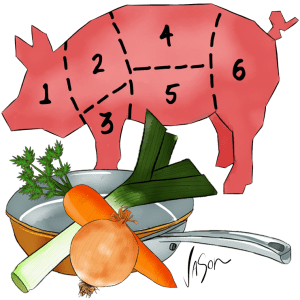
Picture of PorkI live in one of the biggest pork producing regions of Australia, so I’ll admit to being a little bias on the subject.

However, as an apprentice chef in the 1980’s, I didn’t have much experience with pork cookery, as it wasn’t all that popular with the typical Aussie.

Which is amazing when you consider that pigs are one of the earliest animals farmed for meat consumption.

Amazingly, they have been domesticated in China for approximately 5000 years.

Thankfully, things have changed. Pork is now one of Australia’s most popular meats, and  I have personally become a huge fan of pork since learning more from the local farmers, butchers and pork processors.

In the past three decades, major innovations have been developed in pig farming, breeding and production.

Australia’s domestic and booming export market is second-to-none. Our strict quarantine and inspection systems have insured a clean and disease free pork industry. It is free from the diseases that have in the past almost decimated the pork industries of other countries.

It would be safe to argue that Australian pork is among the highest quality in the world.

With the developments in grain-feeding and standardised cutting and trimming techniques, pork is also 50% leaner than it was thirty years ago.

In fact, contrary to popular misconceptions modern pork cuts such as butterfly steaks are so lean and tender that they can be cooked in very much the same way you would cook beef. You could actually chose to eat it medium rare, and it would be the most succulent and  juicy pork you’d ever eaten.

When buying pork, look for pale pink flesh and firm white fat that is not wet or waxy in appearance.

How to Roast a Pork Leg

Pork leg is best for roasting. Most pork legs will feed a large family gathering.

To make the leg easier to carve have your butcher remove any backbone.

Roast your pork leg at 180oC for 25 – 30 minutes per every 500g.

The most popular part of eating roast pork is the crackling; unfortunately there is never enough (you’ll just have to fight over it). For the best crackling, remove the skin from the leg, score it, and rub it with salt and a little white vinegar. Roast the crackling separately, beside the leg.

Serve with apple sauce. gravy and roasted veggies.

Posted in Food and Cooking | Tagged , , , , , | Leave a comment

The King of Peasants

Picture of TurnipsIt’s my humble opinion, turnips are one of those good-old-fashion peasant vegetables, and I love them.

They’re hearty, healthy, earthy, rustic, versatile and affordable.

Turnips are a root vegetable, and are in fact a relative of cabbage.

The root section of the plant swells into a bulbous shape, and the top of the bulb that is slightly exposed to sunlight often develops an attractive, purplish suntan, while the unexposed base remains white.

The immature stems and leaves of the plant can also be used as a cooked leafy vegetable or used fresh in salads.

Cultivated in Europe for millennia, turnips are now grown all over the globe and have found their way into the cuisines of almost all cultures.

They come in a variety of shapes, sizes and colours. Turnips can be purchased in a long root shaped, small baby size or large mature bulb shaped. I have seen deep red, purple, green and pure white skinned varieties – but virtually all have white flesh.

The smaller immature turnips can be eaten raw, finely grated into salads as they are tender, juicy and spicy.

The more mature contain less water, are more fibrous have developed a sweeter flavour profile.

For this reason, the larger variety is usually cooked into a dish with other ingredients.

They can be roasted, braised, boiled, mashed, steamed and sautéed.

Sesame Roasted Vegetables

  • 500g turnip, wedges
  • 500g pontiac potato, quartered
  • 500g jap pumpkin, wedges
  • 500g red onion, wedges
  • 500g carrot, quartered lengthwise
  • 2 tbsp sesame oil
  • ½ cup olive oil
  • 2 tbsp sesame seeds
  • ¼ cup brown sugar
  • salt and pepper
  1.  Pre-heat oven to 200oC.
  2. Toss all ingredients together in a bowl until well coated.
  3. Arrange vegetables on a greased roasting tray.
  4. Bake for approximately 40 minutes or until golden brown and cooked through.
  5. Serve with your favourite roast Christmas meats.

Serves 8

Posted in Food and Cooking | Leave a comment

Which Fork’n Knife?

Picture of chef with knife and forkA lot has changed in the world of food and cooking since I first became a chef.

For one thing, dining out has become a lot more casual.

In fact, the traditional formal dining experience has become quite a rarity.

As a result, much of the classic dining etiquette associated with cutlery, crockery and formal dinner protocol is becoming a lost skill.

Therefore some people may struggle to understand how the layout of a formal dinner setting is used. This can be a little awkward if they find themselves in a fine dinning environment with a wide selection of cutlery laid out before them.

However, for those who need some clarity regarding the correct use and understanding of various cutleries, here are some basic principles: 

  • In the restaurant industry, all eating implements used on a table setting are referred to as ‘Flatware’ and in many western countries, the words ‘cutlery’ and ‘silverware’ are interchangeable.
  • There is a myriad of specialised cutlery, such as steak knives, fish knives, parfait spoons, oyster forks, crab crackers and lobster picks. But don’t fear because the next rule will help you identify when to use them.
  • The most critical piece of knowledge I can share is that the cutlery is carefully laid out with the intension it will be used in a very specific sequence. The basic rule is that the cutlery placed at the furthest point from the meal on both left and right-hand sides are to be used first, then you follow with the next pieces of cutlery in line, moving inward.
  • The forks are always located on the left, and the knives and spoons (such as soup) on the right.
  • If you find a knife resting on top of a side plate, this is for buttering your bread.
  • Dessert cutlery is often positioned above the plate, where you will normally find a fork and dessert spoon perpendicular to all other cutlery, this will be used last.
  • When you are finished eating place your dirty cutlery on the plate – parallel to each other – with the pointy ends facing inward. This will alert the waiter to clear your plate ready for the next course.

There is much, much more to the conventions of dining, such as the correct placement of glasses and appropriate table manners, formal customs and decorum.

But hopefully the brief tips above may shine some light on how to chose which fork’n knife to use.

Posted in Food and Cooking | Tagged , , , , , | Leave a comment

Coffee Kicks

coffee cup saucer and beansWell it may not be food, but my life is unsustainable without it.

Coffee is my greatest vice – and somehow I don’t think I’m alone.

These days I drink straight 30ml shots of espresso – no milk or sugar.

It allows me to really taste the qualities of the coffee grind, and all the subtle flavour profiles.

Besides, it means the coffee is faster to make and I get to drink it immediately from the espresso machine – which satisfies my caffeine deficiencies.

If you thought that beer was the most consumed beverage in the Western world, then you thought wrong.

Beer actually comes second to coffee in most national consumption, which may explain the record sales of home espresso machines and the boom in coffee making courses.

The coffee tree is indigenous to Africa, but is now grown in many tropical and sub-tropical countries.

The tree produces a red coloured bean, which is washed, fermented, de-husked, dried-out and then roasted.

Before grinding, beans of various origins are often blended to give a more complex and full flavour.

There are two main varieties of coffee:

Arabica – is the finest and most expensive, it has little acidity and the richest flavour

Robusta – is an inferior variety of bean, cheaper, less flavour, but more caffeine

Kicking Affogato

Affogato means ‘flooded’. In a latte glass, place one big scoop of premium quality vanilla ice cream and drizzle with a tablespoon of honey. Pour in a nip of Tawny Port and then flood the whole lot with a shot of strong freshly made espresso.

Posted in Food and Cooking | Tagged , , , , , | 2 Comments